- PRA (Punjab Revenue Authority)Punjab
- Updated
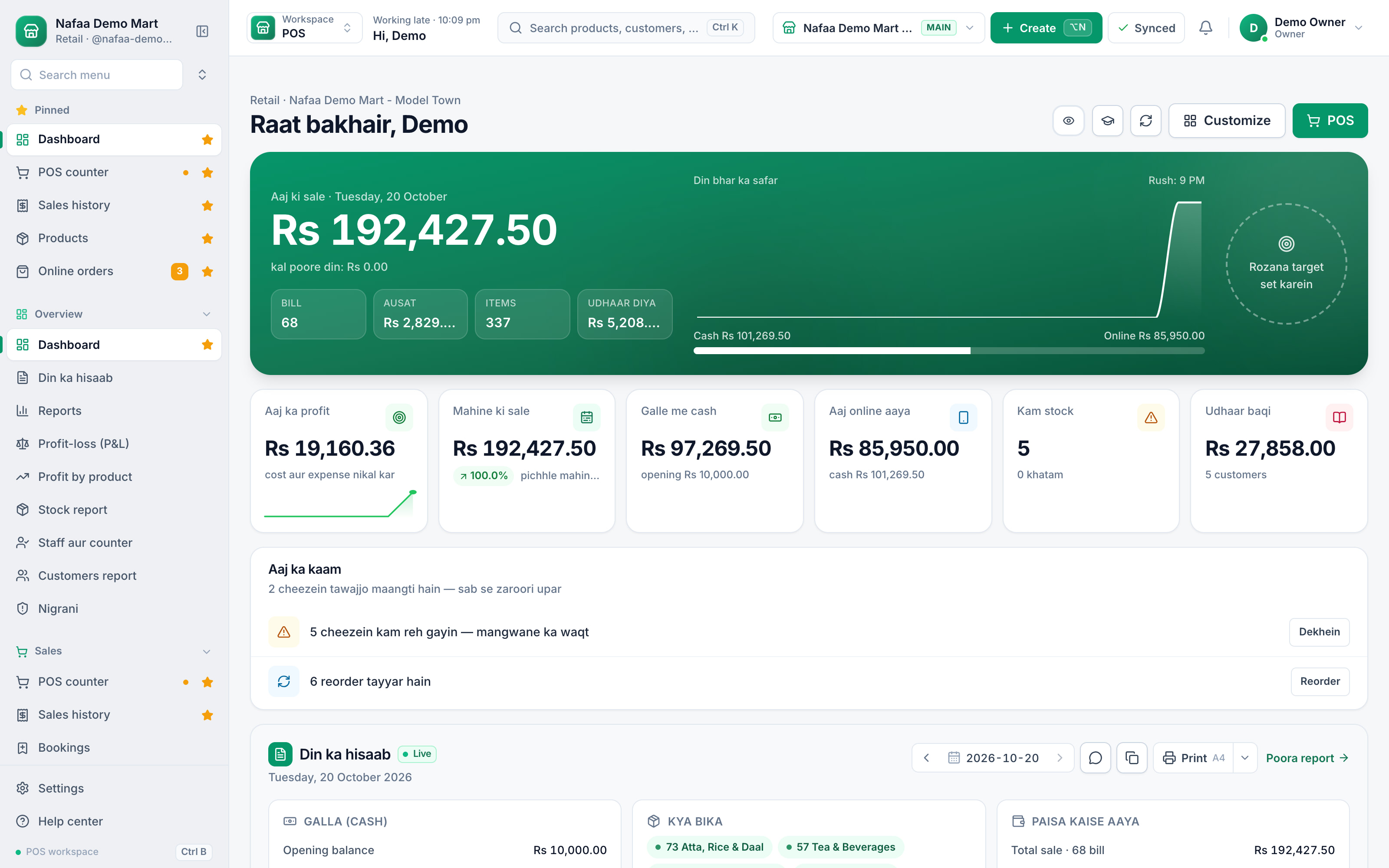
PRAKiryana POS in Lahore
Kiryana POS software in Lahore
For the general store that restocks daal, chawal and masala from the walled city's wholesale lanes and sells them by the pao and the kilo in Samanabad, Shadbagh or Township.
- Wholesale and retail rate
- Pao, kilo and bori
- Khata with reminders
Short answer
Nafaa is POS, stock and khata software for Lahore kiryana and general stores. Goods bought by the bori and carton in the old city sell by the kilo, packet or piece, each with its own price; every regular family keeps a khata with WhatsApp reminders; and the counter keeps billing through load-shedding.
Roman Urdu mein
Lahore ki kiryana dukaan ke liye: Akbari Mandi se bori aur carton me maal aaye, counter par pao, kilo ya packet me bike. Har ghar ka udhaar khata me, aur bijli jaye to bhi bill bante rahen.
Key facts
- Built for
- Kiryana, general stores and small grocery marts across Lahore
- Units
- Bori, carton, dozen, kilo or piece on the same product
- Khata
- Running balance per family, reminders on WhatsApp
- Price
- Paid plans from Rs 1,500 a month, with a free trial first
Where a Lahore general store gets its stock
Much of Lahore's dry grocery still passes through the walled city. Akbari Mandi was set up as a grain market in the time of Emperor Akbar and is still trading; the Walled City of Lahore Authority describes it today as the wholesale market for grains, spices, herbs and chemicals. A short walk away, Papper Mandi deals in herbs, perfumes, murabba and the plastic bottles many shops pack them in, and Shah Alam Market supplies cosmetics, accessories and small household goods that fill the front shelves of a neighbourhood store.
From there the chain is simple and old. A store owner or his supplier buys rice, pulses, sugar and spices by the bori, a carton of soap or a tin of ghee, and the shop breaks it into the small amounts its customers ask for: a pao of red chilli, half a kilo of moong, one sachet of shampoo. Prices in the wholesale lanes move with the season, and a margin that looked fine in Ramazan can be gone by winter if nobody checks what the last bori actually cost.
Most of the trade outside the old city is on trust. A store in Mozang or Shadbagh knows its families by name, gives goods through the month and collects when salaries arrive. Load-shedding from the LESCO grid is part of the routine in many areas, so the counter has to keep working on a charged phone or laptop when the lights go.
Inside the app
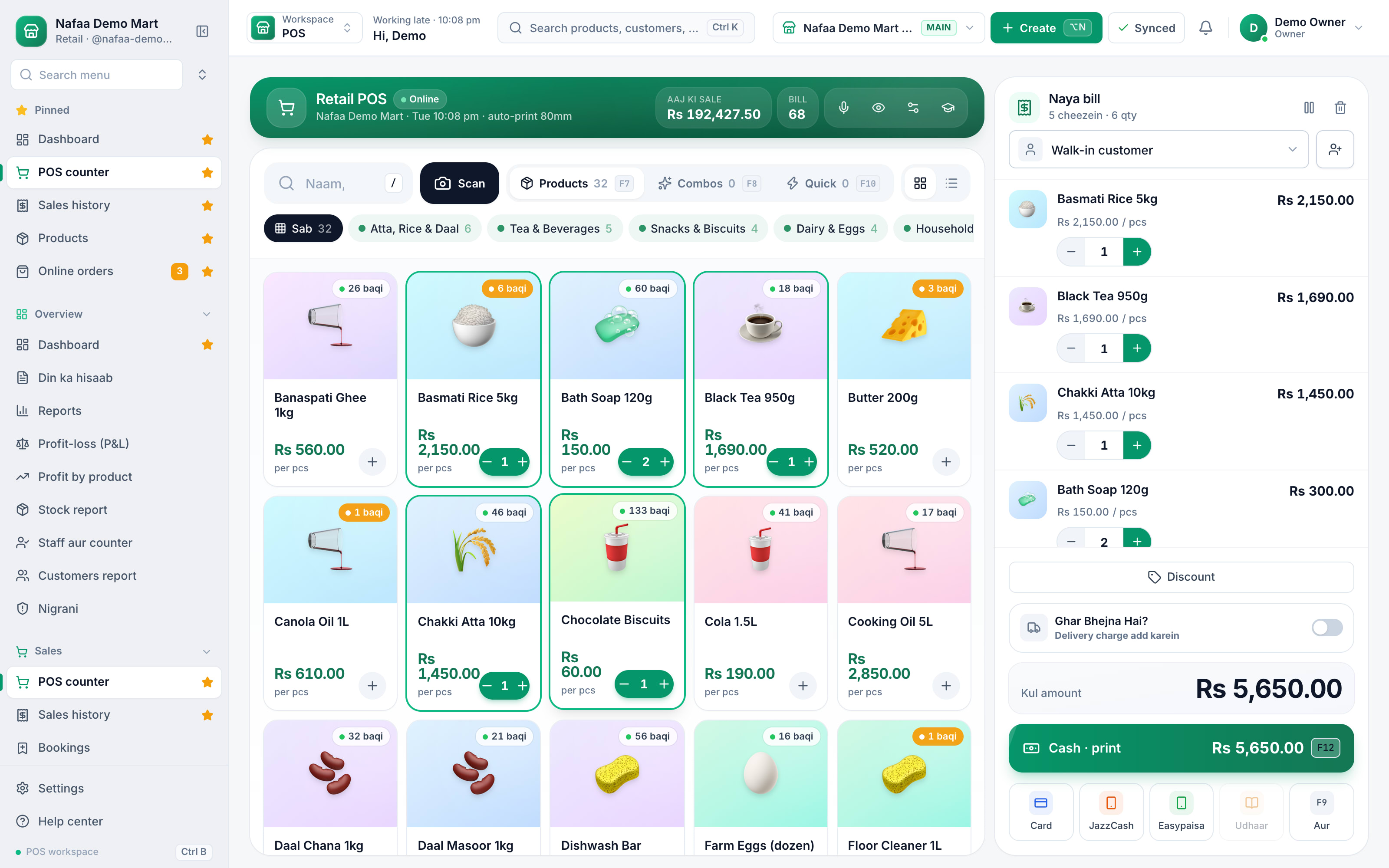
A counter for loose and packed goods
Scan packed items with a barcode reader, tap a quick key for loose sugar or eggs, and choose the unit at the counter. The bill shows stock left on each item and takes cash, JazzCash, Easypaisa or udhaar.
A week in a Lahore kiryana, step by step
After the mandi trip. Enter the wholesaler's bill as a purchase. The bori of basmati, the masala packs and the soap cartons go into stock at the price you paid, and if you settled part of the bill, the rest stays on the supplier's account. Next week you can see whether chana daal went up again.
Pricing. Each product keeps a retail price and, if you sell to small hotels or other shops, a wholesale price too. The cashier picks the wholesale rate for that customer and the normal rate for everyone else, so nobody has to remember two price lists.
Through the day. Children come with a list and the family's name. Each item goes on that family's khata, and the balance updates on the bill. If the lights go, the bill is still made on the device and synced later.
Damage and expiry. A burst packet of daal or a jar past its date is written off as damage, so it leaves stock and shows as a cost instead of quietly disappearing.
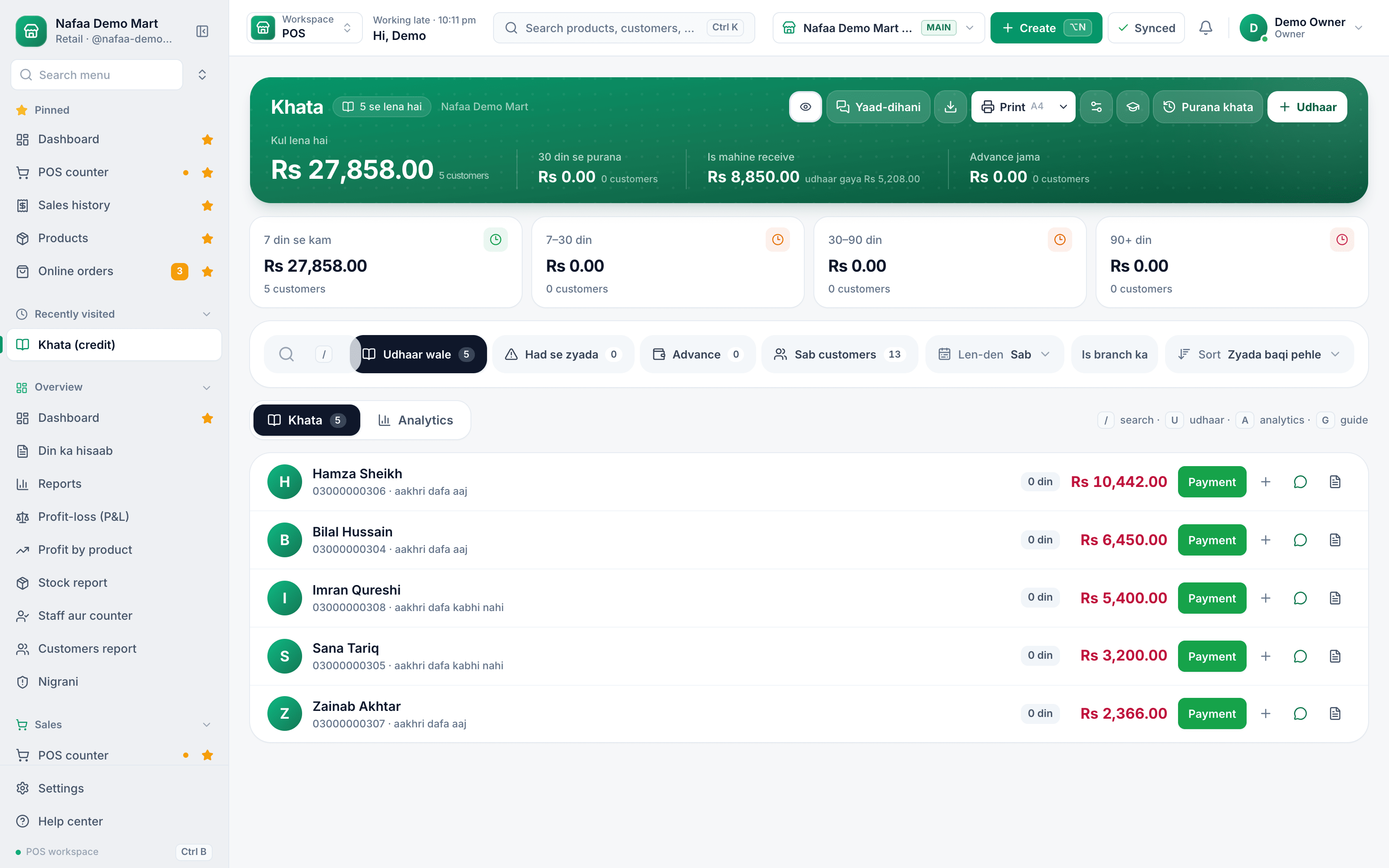
Month end. Sort the khata by amount and age, and send each family its balance on WhatsApp, one message at a time.
What changes for a Lahore kiryana
| Feature | Done by hand | In Nafaa |
|---|---|---|
| Wholesale rate for a hotel, retail for a family | Two price lists in the owner's head | Wholesale and retail price on the product |
| Bori bought, pao sold | Margin guessed at the counter | Each unit priced, profit per product |
| Supplier balance from the mandi | Slip in a drawer | Purchase bill with the amount still owed |
| Damaged and expired goods | Thrown away, never counted | Written off as damage, seen as cost |
| Load-shedding at peak time | Calculator and memory | Bills on the device, synced later |
The udhaar register in one place
Each family's udhaar, payments and old register balance sit on one khata. The list shows who owes most and for how long, and a WhatsApp reminder goes out from the same screen.
Getting started
Moving a Lahore general store onto Nafaa
- 1
Import your item list
Fill the Excel template or send photos of your register; check it in a dry run, then import.
- 2
Add units and two rates
Set bori, carton, kilo or piece, with a wholesale rate where you need one.
- 3
Copy the khata balances
Each regular family is added once with the balance from the paper register.
- 4
Set quick keys
Loose sugar, eggs, bread and daal become one tap each.
Questions from Lahore store owners
I sell to small hotels at a lower rate. Can the counter handle that?
Yes. A product can carry a wholesale price beside its retail price, and the cashier chooses it for that customer. Units such as bori and kilo can also carry their own prices.
Can I see which items earn the most after the last price change?
Yes. Profit by product uses the cost from your latest purchase bills, so when the mandi rate for a spice rises you see the margin drop.
Do I need PRA or FBR integration?
Most neighbourhood stores do not. Optional FBR/PRA integration is there for a business that is required to report; the Punjab sales tax guide explains who that is.
I have two stores, one in the old city and one in a society. Can I see both?
Yes. Each branch has its own counter and stock, and the owner sees both from one account. The Lahore page covers the other trades in the city.
Plans for Lahore
Free
Choti dukaan ke liye hamesha muft: 1 dukaan, 1 user, 300 bill mahana.
Rs 0
What is included
- 100 products
- 300 sales a month
- 1 user
- 1 shop
Basic
Chhoti dukan ke liye perfect
Rs 1,500/ monthRs 4,000/ quarterSave 11%Rs 15,000/ yearSave 16%Get startedStarts with a 7-day free trial
What is included
- 5,000 products
- Unlimited sales
- 3 users
- 1 shop
Pro
RecommendedBari shops aur multi-branch ke liye
Rs 3,500/ monthRs 9,500/ quarterSave 9%Rs 36,000/ yearSave 14%Get startedStarts with a 7-day free trial
What is included
- Unlimited products
- Unlimited sales
- 10 users
- 3 shops
Enterprise
Unlimited everything + 24/7 support
Rs 9,500/ monthRs 27,000/ quarterSave 5%Rs 99,000/ yearSave 13%Get startedStarts with a 7-day free trial
What is included
- Unlimited products
- Unlimited sales
- Unlimited users
- Unlimited shops
More about Lahore
- All cities
Lahore
Nafaa is POS, stock and khata software for shops, restaurants and businesses in Lahore. It runs on the phone or computer you already have, keeps billing without internet, and keeps udhaar in a digital khata, with setup help on WhatsApp.
- Kiryana software across Pakistan
Kiryana & Grocery Store
Nafaa is POS and khata software for kiryana and grocery stores in Pakistan. Scan barcodes at the counter, sell by piece, dozen or carton, keep every customer's udhaar in a digital khata with WhatsApp reminders, import products from Excel, and keep billing when the internet drops.
More questions
Can I sell the same item by piece, dozen and carton?
Yes. A product can be sold in more than one unit, such as piece, dozen and carton, and each unit has its own price. So the same biscuit can go out as a single packet to one customer and as a full carton to a shopkeeper who buys in bulk, each at its own price.
Can I add my products from Excel?
Yes. Download the template made for your business, fill it or paste your list, and upload it. Nafaa first checks every line in a dry run, flagging duplicates by name, SKU or barcode and bad prices, without saving anything. Then the import runs in chunks, and lines that need fixing download as Excel with the reason.
Can Nafaa send udhaar reminders on WhatsApp?
Yes. The khata keeps each customer's udhaar, payments and balances brought over from the old register. From the khata you send a customer a WhatsApp reminder with their balance in one tap. Reminders go one by one from your own WhatsApp, and the wording gets firmer as the udhaar gets older.
Does Nafaa work without internet?
Yes, the counter keeps billing when the internet drops. Sales made offline are saved on the device and sent to your account automatically when the connection comes back, and you can see the sales still waiting to be sent. Reports and other branches see those sales once they have synced.
How much does Nafaa cost?
Paid plans start at Rs 1,500 a month. The pricing page lists every plan with its price and limits, taken straight from our plan settings, so it is always current. You can start with the free trial first, and no credit card is needed to sign up.
Bring your Lahore store's register onto one screen
Try it free on the phone or computer at your counter. Send your item list on WhatsApp and we set it up with you.
- 7 din Free Trial
- Keeps billing offline
- Help on WhatsApp